
Infectious mononucleosis – initial infection caused with Epstein-Barr virus (EBV)
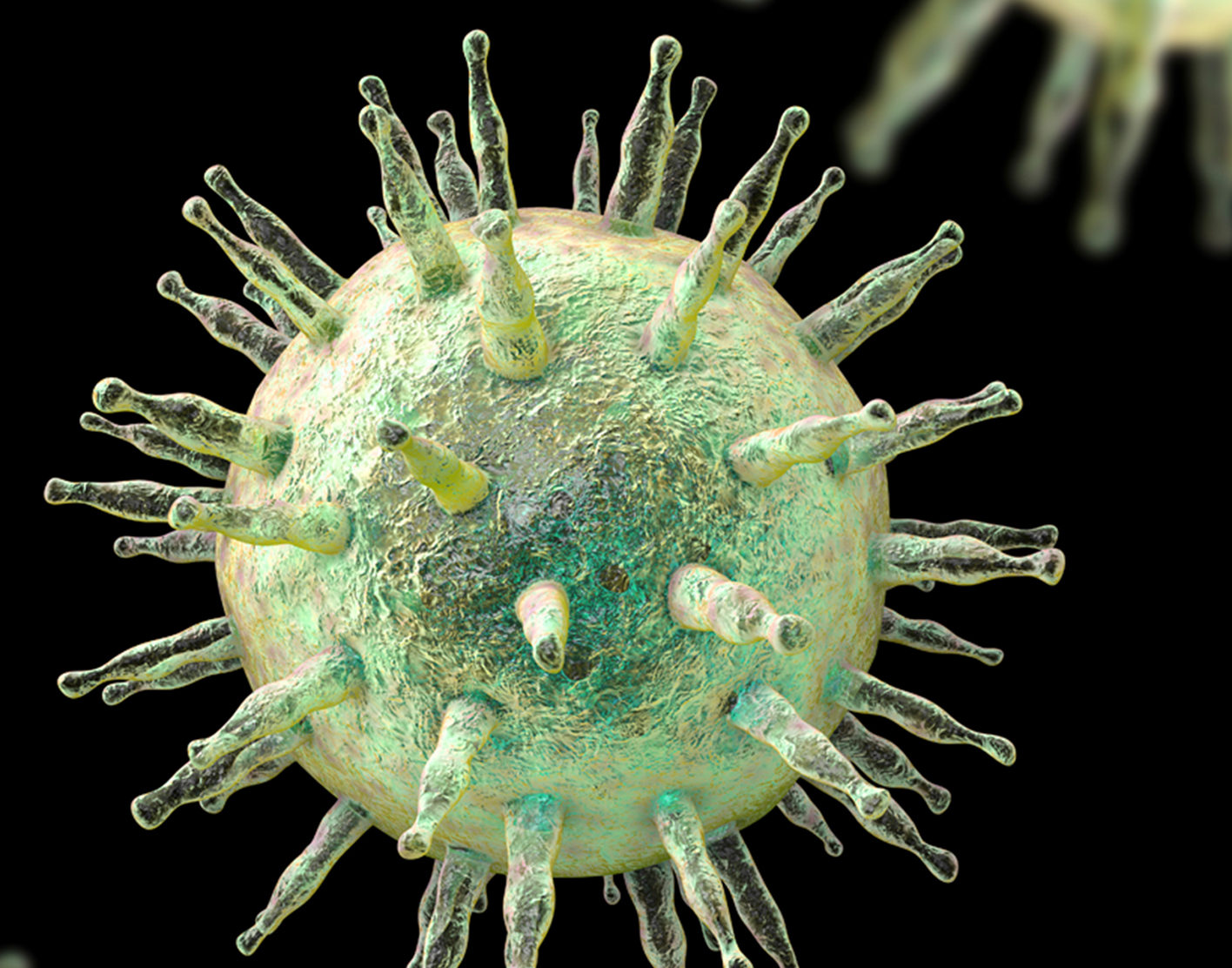
Infectious mononucleosis or Filatov's diseasePfeiffer's disease, Glandular fever, subleukemic leukocytosis, benign leukemia, lymphomonocytic angina etc. – it is an initial infection caused with Epstein-Barr virus (EBV) which has the following symptoms:
- fever;
- intoxication;
- tonsillitis;
- enlarged spleen, liver and lymph nodes;
- atypical mononuclear leukocytes in peripheral blood.
EBV, like the other herpesviruses , persist in blood for the long period and may have chronicle or latent form with the periodic exacerbations.
EBV is widely spread all over the world and about 90-95% of adults are infected by the virus.
Sick people or virus hosts are the sources of infection.
Infection transmits by droplet, contact, alimentary, transfusion, sexual way, rarely – vertically and by organs' transplantation. One of the names of infectious mononucleosis - kissing disease – points to the most spread way of its transmission.
Symptoms and course of illness:
Infectious mononucleosis has several forms according to the kinds of manifestation:
ü according to the clinical signs: typical, atypical and subclinical;
ü according to severity: light, moderate severity and severe;
ü according to course: acute and chronicle
Typical form of infectious mononucleosis
Latent period is shorter for children, then for adults and lasts from 4 to 18 days, rarely – 8 weeks. Typical form starts acutely, unexpectedly or with the prodromal syndromes: shiver, sweating, anxiety, headache, myalgia (pains in muscles), depression and low appetite. Prodromal signs may last 1-2 weeks, then the triad occurs which is typical for infectious mononucleosis: fever, sore throat, enlarged lymph nodes.
Infectious mononucleosis triad:
fever
sore throat
enlarged lymph nodes
90% of patients have fever which lasts for 10-14 days and achieves maximum in the evenings (38-39C). The other picture may develop as well: subfebrile temperature all day long.
Tonsillitis is one of pathognomonic signs of the illness. Due to enlarged nasopharyngeal tonsils, nasal breath is difficult, stridor (harsh vibrating noise when breathing) occurs.
Simultaneously with mononucleosis tonsillitis pharyngitis of streptococcal origin may develop.
Polilymphadenopathy is a constant clinical sign of infectious mononucleosis. Sometimes, all the lymph nodes enlarge (generalized lymphadenopathy), sometimes lymphadenopathy occurs in one or two places (ex. in the area of neck and axillary crease, neck and groin). In case of generalized lymphadenopathy, mesenterial lymph nodes enlarge as well, due to which a patient has abdominal pains and sometimes, due to irritation of abdominal wall, nausea and vomiting start.
Infectious mononucleosis causes liver to enlarge, it is soft and painless. Mononucleous hepatitis generally runs without icteritiousness, in rare cases, enlarged liver is accompanied with icteritiousness.
Enlarged spleen is one of the cardinal signs of infectious mononucleosis. It develops from the 2 nd – 3 rd day of illness and rarely leads to the severe complication – splenic rupture. From 3 rd – 4 th weeks spleen dimensions became normal.
5% of the patients have rash. It may be of the various forms: papular, nodular, petechial (urticaria) and, as a rule, it is localized on the truck and on the extremities.
Laboratory indexes typical for infectious mononucleosis: leukocytosis in the peripheral blood, rarely, on the first and second day of illness – apparent leucopenia; leukocytosis manifests from the 5 th -6 th day. Also atypical mononuclear leukocytes and plasma cells are present.
Epstein-Barr virus
Chronicle form
Clinical signs developed as a result of the initial infecting, rarely last up to 4 months. If sickness lasts more than 6 months, the chronicle form of mononucleosis develops. Typical signs include asthenovegetative syndrome (weakness, fatigue, depression), prolonged subfebrile temperature with the periodic rise, recurrent pharyngitis, pain and sense of heaviness in the right subcostal area, meteorism, anorexia, arthralgia, myalgia. Objective signs: pronounced polilymphadenopathy, hepatosplenomegaly. Changes in the biochemical blood test. In the peripheral blood quantity of atypical mononuclear leukocytes and heterophilic antibodies grows.
The above clinical signs may last for 3-5 years.
Diagnostics
First turn examinations:
ü complete blood count
ü heterophilic antibodies
ü specific antibodies of Epstein-Barr virus (IgM, IgG);
ü polymerase chain reaction in real time
Determination of antibodies Anti-EBV IgM and Anti-EBV IgG in blood.
Other possible examinations:
ü CT of abdominal cavity;
ü ultrasonic examination of abdominal cavity
Complications:
Infectious mononucleosis rarely complicates with paratonsillitis, otitis, pneumonia, neuritis, plexitis, meningoencephalitis, polyradiculoneuritis, myocarditis etc. Rarely, very severe complication is splenic rupture manifesting with strong pain in abdomen and shock.
Treatment
Infectious mononucleosis usually has a favorable prognosis, although single cases of splenic rupture and fatal termination are described.
Infectious mononucleosis does not need any specific treatment, but generally pathogenetic and symptomatic therapy. During the first two weeks of illness it is recommended to observe bed rest, especially in the case of pronounced splenomegaly, and a diet: easily digestible food rich in vitamins, calories and enough drinking.
Pathogenetic treatment means use of antiviral medications. Sometimes use of corticosteroids becomes necessary.
Symptomatic treatment:
In the acute phase of illness – oral cavity sanation with antiseptic solutions;
In case of fever – non-steroid anti-inflammatory medications and acetaminophen;
In case of acute intoxication – intravenous transfusion of disintoxication solution;
In case of accompanied streptococcic tonsillitis antibiotics are needed.
I wish you be healthy!
Pediatrician Maia Khukhunaishvili